
 Victor Arias
A website generated with AI (Lovable, Bolt, Replit, v0) works as a prototype, but by month six it fails where you can't see it: no CMS to edit, you don't own the code, technical SEO is weak and there are no backups or staging. Moving it to WordPress costs $300-900 for the audit and plan, and $700-6,000 depending on size, keeping URLs and 301 redirects so rankings don't drop.
By 2026 almost everyone has typed a sentence into a chat and watched an entire website appear in twenty seconds. The feeling is addictive: for the first time, building your business site doesn't depend on a supplier answering your email. And it works. That's the problem: it works as a mock-up, and a business needs an asset.
It's not that AI builds bad websites. It builds excellent prototypes. What it doesn't hand you is the building: the CMS, the backups, the technical SEO, ownership of the code and someone who can change a phone number on Tuesday without calling anyone. This article is the honest conversation we have every week with someone who arrived with a Lovable, Bolt, Replit or v0 site and, six months later, can't touch it.
Why an AI-built website falls apart in month six
The pattern repeats so often we recognise it from the first sentence: "I built it with AI and it works, but I don't know how to change the text". That's not the user's fault. It's the logical consequence of a tool designed to produce an application in the browser, not a maintainable website.
What these tools do very well
It has to be said, because the debate fills up with contempt and that doesn't help. An AI app builder is excellent for validating an idea in a day: a campaign landing page, an investor demo, a form to test whether people buy, a prototype to show a client. That used to cost two weeks and an invoice; now it costs an afternoon. That saving is real and there's no point pretending otherwise.
What they don't give you
What they don't deliver is everything that turns a demo into a site that lasts three years: a content management system so the team can edit without touching code, version control, staging environments, restorable backups, an update plan, structured data, accessibility and a place where content can be crawled without executing JavaScript. None of that shows on the first screen. All of it shows up in month six.
 AI writes the code; what it doesn't do is stay and maintain it with you.
The five invoices that arrive later
When someone asks us to "fix" an AI-generated website, we almost always find the same five problems. Order matters: the first two cost sales, the next three cost money.
- SEO: many of these apps render on the client. Google does execute JavaScript, but not always with the same patience as a browser, and the result is a page with impressions and no clicks. No per-page titles, no canonical, no sitemap and no structured data means the content exists for you and nobody else.
- Content: nobody on the team can edit. Changing opening hours, a price or a photo means going back to the chat, asking for the change and waiting. In practice, the site freezes the day the founder runs out of time.
- Ownership: the code lives on the platform. If the plan goes up, if the terms change or if the service closes, your website goes with it. You don't have the repository, the database or the domain configured in your name.
- Security and data: forms without validation, keys written into the frontend, cookies without consent and personal data in a service with no processor agreement. This is where a pretty website becomes a legal problem.
- Performance: fonts, libraries and scripts loaded from three different places. The page takes forever to paint, and on mobile the user leaves before seeing it.
What can be saved and what has to be rebuilt
The good news: an AI-built website isn't thrown away. Almost everything that cost thinking is reused, and what cost typing is rebuilt.
Saved: content, URLs and design
The copy, the photos, the section structure and — most importantly — the URLs that already rank are kept. So is the design, which can be rebuilt in WordPress with the same visual hierarchy. If the site already has traffic, that traffic is the asset and it's protected with 301 redirects one by one, not with a catch-all rule.
Rebuilt: the technical structure
There's no shortcut here: templates, forms with validation and anti-spam, a CMS with roles, automatic backups, a staging environment and structured data. That's exactly the work AI skips because it doesn't show on screen.
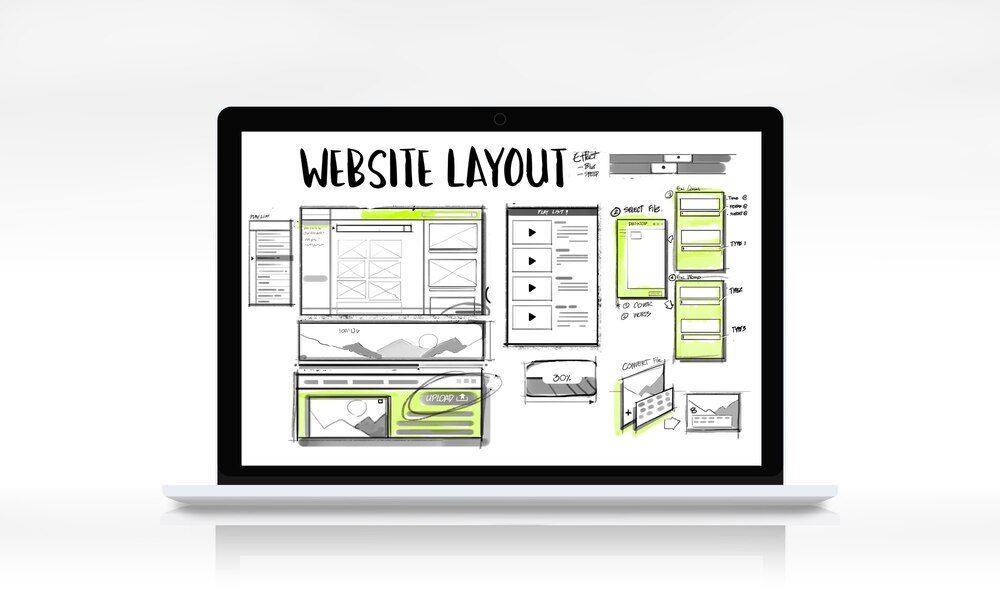 What gets migrated isn't the code: it's the structure and the content that already works.
How to migrate without losing SEO: the order that works
This is the order we follow, and the reason order matters is simple: if you publish before the redirects exist, you lose positions within forty-eight hours and take months to recover them.
- URL inventory: crawl the current site and list every address that receives impressions in Search Console, not just the ones in the menu.
- 301 redirect map: one by one, from old URL to new, before touching DNS.
- Same slugs wherever possible. Changing the URL of a page that already ranks is giving away its history.
- Titles, descriptions and headings reviewed one by one: migrations lose details nobody looks at and those are the ones capturing search demand.
- Structured data and a new sitemap, submitted to Search Console on the day of the switch.
- Before-and-after measurement: impressions, clicks and position for four weeks. Without a baseline there's no way to know whether the migration went well.
A detail that always gets forgotten: the old site isn't switched off on migration day. It stays live and redirecting for at least a month, and 404s get reviewed every week.
How much it costs to move an AI-built website to WordPress
Indicative ranges in dollars, excluding taxes, depending on the real size of the site:
- Audit and migration plan (URL inventory, redirect map, risks): $300-900.
- Landing page or one-page site: $700-2,000, plus content.
- Corporate site of 8 to 15 pages with a blog and protected forms: $2,500-6,000.
- Site with a private area, catalogue or store: from $6,000, because there's business logic AI never generated.
- Maintenance: $50-250 per month, which is the part that decides whether the site is still alive in 2029.
Compare that with the real alternative, which isn't "zero": it's regenerating it every time something changes, or rebuilding it entirely in twelve months. Almost nobody budgets the second option and almost everybody ends up paying it.
Conclusion: AI is the scaffolding, not the building
Artificial intelligence has lowered the cost of starting. It hasn't lowered the cost of maintaining, and that's the invoice that arrives later. Using AI for the prototype and WordPress for the asset isn't giving up speed: it's keeping the best of both and not paying for the same website twice.
At TakeYourDesign we migrate AI-generated websites to our own WordPress development, with redirects and SEO reviewed before publishing. Tell us what site you have and what you need to change and we'll tell you what can be saved, with no obligation. If you're still weighing up the full budget, start with how much a website costs in 2026.
Frequently asked questions
Is an AI-built website bad?
No: it's an excellent prototype. The problem is using it as a company asset without a CMS, code ownership or technical SEO.
Do you lose SEO when migrating to WordPress?
Not if it's done in order: URL inventory, 301 redirects one by one and the same slugs. What loses rankings is publishing before the redirects exist.
How much does the migration cost?
Audit and plan $300-900; landing $700-2,000; corporate site of 8-15 pages $2,500-6,000.
Can I keep editing the site without coding?
Yes, with WordPress and a CMS with roles: the team changes copy, photos and prices without touching code. See WordPress development.
What happens to the design I already have?
It's kept: it's rebuilt in WordPress with the same visual hierarchy. What gets rebuilt is the technical structure, not the brand.
Where do I start?
Tell us what site you have and what you need to change and we'll tell you what can be saved, with no obligation.