 Victor Arias
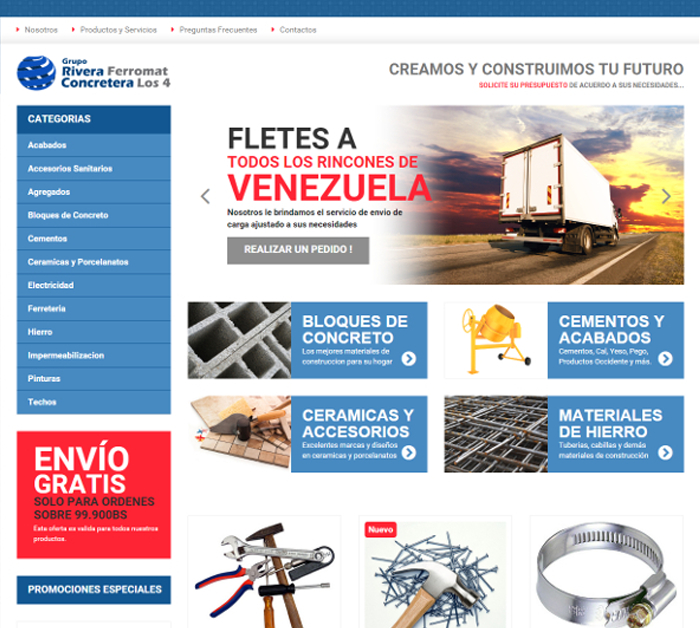
Grupo Rivera Ferromat is a B2B online store built from scratch on PHP and MySQL for a hardware supplier: over 10,000 active products, different prices depending on the type of customer, wholesale orders, product reference search and stock synced with the company's management system. The project was delivered in over three months.
| Client | Grupo Rivera Ferromat |
| Industry | Hardware and industrial supplies |
| Service | Custom development |
| Stack | PHP, MySQL, Apache, Own platform (no off-the-shelf base), Per-client pricing module (B2B), Product reference search, Stock sync with the management system |
| Duration | Over 3 months |
| Our role | Full development of the store: a catalog of thousands of references, per-client pricing, wholesale orders, reference search, customer account with order history and stock synchronisation. |
| Published | April 12, 2016 |
Grupo Rivera Ferromat is a hardware supplier that sells to professionals: builders, fitters, workshops and small construction firms who buy by the box and reorder every week. Its online store could not be a regular store — one price for everyone and a one-unit cart — so it was built from scratch on PHP.
The result: over 10,000 active products, different prices depending on the type of customer, wholesale orders, product reference search and stock synced with the company's management system. The project was delivered in over three months.
The challenge: a hardware store that sells to professionals
A hardware store online has three problems that do not appear in other businesses, and all three come from the same thing: the buyer is not a passer-by, they are a professional who buys a lot, buys often and knows exactly what they want.
A price cannot be a single price
The fitter buying a hundred units cannot pay the same as someone taking a single screw, and the workshop you have worked with for years does not pay the same as a first-time buyer. If the store has one price, you either lose margin on professionals or drive them away with a retail price they cannot work with.
The customer arrives with the reference in hand
Nobody in a hardware store searches for "screw", they search for the exact size, diameter or reference, and often the customer already has it written down from a quote. A search that only understands commercial names forces them to browse categories until they find the part, and with thousands of references that means losing the sale.
Thousands of references and stock that changes daily
A hardware catalog is not a set of products published once: new references come in, others are discontinued and stock moves every day at the counter. If the store and the company's management system do not say the same thing, the customer buys something that is not there.
The solution: a store built from scratch on PHP
The whole store was built from scratch on PHP and MySQL, instead of bending an off-the-shelf platform to a hardware supplier's rules. The reason is that almost everything defining this business — per-client pricing, wholesale orders, reference search and synced stock — are rules, not templates: they are implemented exactly as defined or they do not work.
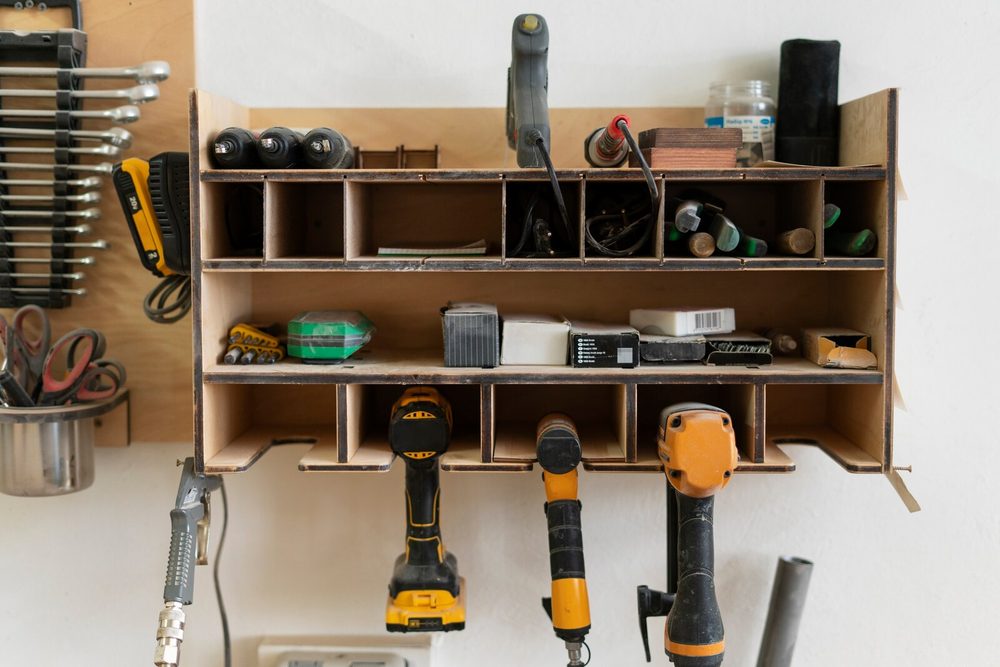 A hardware catalog is organised by references and sizes, not by commercial names: the store has to answer to that logic.
Per-client pricing: the price stops being a product attribute
The per-client pricing module lets every buyer have their own price list assigned and see that price once logged in, both on the product page and when closing the order. It is the deepest change in a B2B store: the price stops being a product attribute and becomes part of the relationship with each customer.
Wholesale orders, with the customer account first
A professional does not buy loose units: they buy boxes, pallets and minimum orders. The store allows that kind of order without the customer having to fight the cart, and always against their account and their price list, so what they see on screen is what they will be invoiced.
Order history: reordering in two clicks
A professional customer repeats: the same materials, month after month. The customer account keeps their order history so they can go back to what they already bought, adjust quantities and confirm, instead of rebuilding the order from the catalog every time.
How we implemented it in over three months
The catalog set the order of the project. Before thinking about the store, the price lists were defined, the references were loaded and the stock was connected; with that base solved, the visible part was the fastest of all.
 Real stock rules: if the store and the management system do not say the same thing, the customer buys what is not there.
The catalog and the pricing first, the store afterwards
Thousands of references with their prices per customer type are not entered by hand: the structure was prepared to import the catalog from the management system and then keep additions and removals up to date without touching the database.
Synced stock and testing per customer type
The store was connected to the management system so the stock the customer sees is the real one, and the full purchase was tested with each type of customer: that each one sees their price list, that the wholesale order adds up and that stock is deducted where it has to be deducted.
Results
The store was delivered working, with the catalog loaded and the pricing rules in production. These were the needs of the project and how they were solved:
| Need | How it was solved |
| Every professional seeing their own price | Per-client pricing, visible once logged into their account |
| Buying wholesale, not one unit at a time | Wholesale orders, with quantities per box and minimum order |
| Finding the product by its code | Product reference search |
| Repeating the usual purchase | Customer account with order history |
| The stock shown being the real stock | Sync with the company's management system |
The measured result of the project: over 10,000 active products in the store. It is the figure that best sums up the work, because a catalog that size is not sustained by hand — every reference with its price list and its stock up to date — but by a platform that does it on its own and a search that finds the part by its code.
What a B2B hardware store needs
If you sell wholesale and are considering taking the business online, these are the points that decide whether the store will sell or just exist:
- Per-client pricing: without different prices for professionals and retail buyers, the store does not fit the business.
- Real wholesale ordering: by box, by pallet or with a minimum order, not just an editable quantity in the cart.
- Reference search, because a professional customer arrives with the code, not with the commercial name.
- A customer account with history: someone who buys again wants to repeat the order, not search for it from scratch.
- Stock synced with the management system: selling what you do not have costs more than not selling.
If your catalog and your prices do not fit a template, our services page explains how we work, and you can write to us to go through your case.
Frequently asked questions
What makes a B2B store different from a regular online store?
In a regular store every visitor sees the same price and buys one unit at a time. In a B2B store the price depends on the buyer, orders are placed by box, pallet or minimum order, and the professional customer comes back: they need to see their own pricing, their history and their usual references. Those are three things you have to build, not configure.
How are the different prices per client handled?
With a per-client pricing module: each buyer has their own price list assigned and sees that price once logged in, both on the product page and in the cart. It is the piece that most shapes a B2B store, because the price stops being a product attribute and becomes part of the relationship with each customer.
Why is reference search so important in a hardware store?
Because a professional does not search for "screw", they search for their exact reference or size, and they often arrive with the code in hand. A search that only understands commercial names forces the customer to browse categories until they find it, and in a catalog of thousands of references that is the difference between buying and going to a competitor.
How long does a B2B store with thousands of references take?
This project was delivered in over three months. The schedule is not set by the design, it is set by the catalog and the pricing rules: loading thousands of references with their price lists, syncing stock with the management system and testing the purchase flow for each type of customer.