 Victor Arias
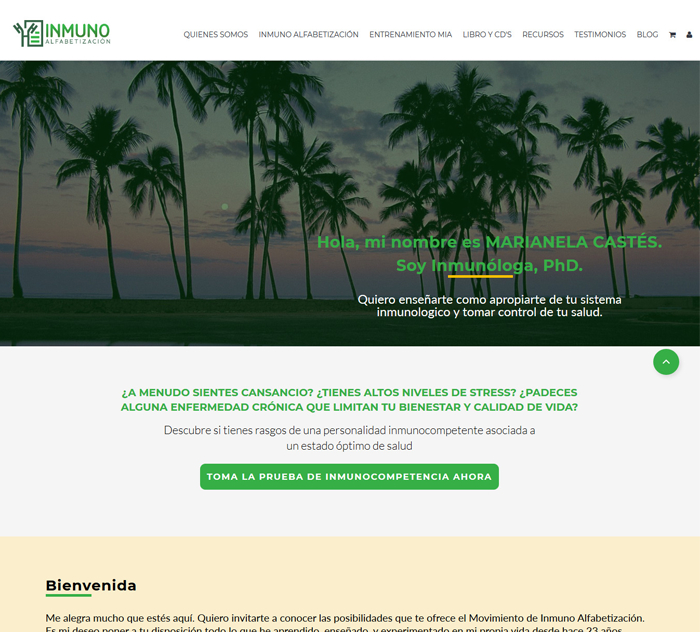
Inmunoalfabetización is a platform built from scratch on PHP and MySQL to sell immunology courses and publications: students buy a course or activate a membership with recurring billing, log into their private area to watch the content and download material, and the same store also sells books. The project was delivered in four to six weeks, multiplied the average order value by 3.5 and passed 120 subscriptions a month.
| Client | Inmunoalfabetización |
| Industry | Online immunology training |
| Service | Custom development |
| Stack | PHP, MySQL, Apache, Own platform (no off-the-shelf base), Memberships with recurring payment, Downloads protected by account, Private student area, Online payment gateway |
| Duration | 4-6 weeks |
| Our role | Full development of the platform: course sales, memberships with recurring billing, material downloads, private student area, book sales and online payment. |
| Published | January 13, 2021 |
Selling online training has one particularity: the product does not run out and is never shipped, but it cannot be left open either. The material has to reach only those who paid, and the platform has to know at all times who has access to what.
Inmunoalfabetización was built from scratch on PHP: course sales, memberships with recurring billing, protected downloads, a private student area and book sales in the same store. The project was delivered in four to six weeks, multiplied the average order value by 3.5 and passed 120 subscriptions a month.
The challenge: selling content you cannot ship
In an online course the product is access. There is no box, no stock and no shipping: there are permissions. That makes the heart of the platform not the catalog but the control of who gets in and to what, and it makes the way you charge change the whole business.
The material can only reach those who pay
A PDF or a video delivered through an open link gets copied and shared within a day, and then the product stops being worth anything. Access has to be tied to the student account and checked on every download, not once at purchase.
The membership changes the business model
When students pay once, revenue depends on finding new people every month. With a membership the charge repeats and access stays while it is active: the business starts relying on retention and on publishing content that justifies staying in.
Students have to come back
A course delivered by email is consumed once and forgotten. If students have their own area with their courses, their history and their downloads, they come back on their own, and that is where a membership makes sense: there is a product to return to.
The solution: a platform built from scratch on PHP
The whole platform was built from scratch on PHP and MySQL, because the product is not a catalog of courses: it is the access system, the recurring charge and the student area. These are interlocking rules and they are implemented exactly as defined.
 Content is consumed inside the platform: access is the product and the student account is the door.
Course purchase and membership sign-up
Students can buy a specific course or activate a membership that charges on its own each period and gives access to the content while it is active. Both paths live together: the one-off purchase works as an entry point and the membership sustains the revenue.
Private area with protected downloads
Inside their account, students see their courses and download the material they are entitled to, with the file served by the system and not from a public folder. This is the part that turns content into a controlled product instead of a loose file.
Books and digital content in the same store
The store also sells books and physical publications, which live alongside the courses in the same catalog and the same purchase flow. One place for digital and printed material, with a single payment and a single order history.
How we implemented it in four to six weeks
The project started with access: who can see what, how it is granted and how it is withdrawn. With that skeleton solved, the store and the student area were built on top.
 The material can be digital or printed, but the rule is the same: whoever has not paid does not get in.
Access control first, design afterwards
Before laying anything out we defined what each course includes, what a student with an active membership sees, what happens when it expires and how each download is protected. Changing those rules later means rebuilding half the platform, so they were closed at the start.
Testing purchase, sign-up and cancellation
The full cycle was tested: buying a course, activating a membership, renewing it, letting it expire and checking that access is withdrawn at the right moment. Those are the paths that leave content open or charges without service when they fail.
Results
The platform was delivered with course sales, memberships and protected downloads working. These were the needs of the project and how they were solved:
| Need | How it was solved |
| The material reaching only those who pay | Access tied to the student account and checked on every download |
| Revenue not depending on monthly acquisition | Memberships with recurring billing |
| Students downloading their material | Downloads served by the system, not from a public folder |
| Students coming back on their own | Private area with their courses, history and downloads |
| Also selling printed material | Books in the same store and the same purchase flow |
The measured results of the project: the average order value was multiplied by 3.5 and subscriptions passed 120 a month. Both figures go together: the membership raises what each student is worth and, at the same time, stops the business from depending on finding new people every month.
What a course platform needs
If you sell training and want to stop depending on one-off sales, these are the points that decide whether the platform works:
- Access control tied to the account: content is the product and whoever does not pay does not get in.
- Memberships with recurring billing, so revenue does not depend on finding new students every month.
- Protected downloads, served by the system and not from an open link that can be shared around.
- A private student area with their courses, history and material, which is where they come back.
- Digital content and printed material in the same store, with a single purchase flow.
- Online payment with a gateway and membership sign-up handled in the same flow.
If you sell training and your model does not fit a template, our services page explains how we work, and you can write to us to go through it together.
Frequently asked questions
What changes when you sell courses by membership instead of one-off sales?
That revenue stops depending on finding new students every month: the membership charges on its own and grants access to the content while it is active, so the business relies on retention and not only on acquisition. That changes the average order value, the content worth publishing and how results are measured.
How is downloadable content protected?
Downloads are tied to the account: only those who bought or have an active membership get in, and the file is served by the system, not from a public folder. With digital products, protection is not an extra: if the material can be copied through an open link, paying stops making sense.
Why is the private student area key in a platform like this?
Because it is where students come back. Having their courses, their history and their downloads in one place is what keeps them using the platform after the first purchase and what gives the membership its meaning: if content is delivered by email, there is no product to renew.
How long does a course platform with memberships take?
This project was delivered in four to six weeks. The schedule is set by access control, the purchase and membership sign-up flow, protected downloads, the private student area and testing recurring billing.