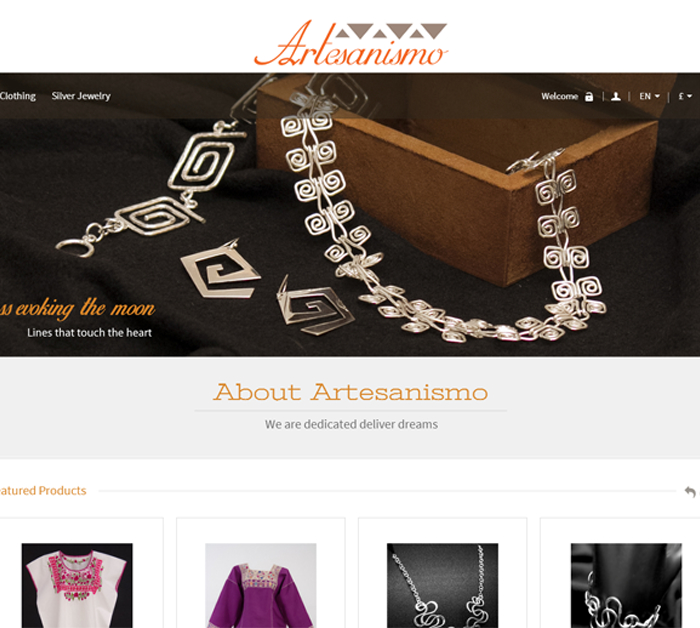
 Victor Arias
Artesanismo is a silver jewellery and crafts store that moved to PrestaShop with a theme of its own: we migrated and optimised the catalog, redesigned the product page, simplified checkout, integrated payments and shipping and added multilingual and multicurrency support, alongside performance and SEO work. The result was 95% more conversion and an average order value 3.2 times higher.
| Client | Artesanismo |
| Industry | Jewellery and crafts |
| Service | PrestaShop Development |
| Stack | PrestaShop, Custom theme, Catalog migration, Catalog optimisation, Product page, Simplified checkout, Payments and shipping, Multilingual and multicurrency, Performance optimisation and SEO |
| Duration | 4-6 weeks |
| Our role | Store development on PrestaShop: custom theme, catalog migration and optimisation, redesigned product page, simplified checkout, payments and shipping, multilingual and multicurrency and performance and SEO work. |
| Published | March 13, 2026 |
A jewellery and crafts store has a problem other shops do not: the customer cannot touch the piece. Everything that a counter resolves by looking and asking — the material, the size, the finish, how it sits — has to be resolved on a screen. And if the product page does not resolve it, the sale is not lost on price: it is lost on doubt.
Artesanismo is a silver jewellery and crafts store that moved to PrestaShop with a theme of its own: we migrated and optimised the catalog, redesigned the product page, simplified checkout, integrated payments and shipping and added multilingual and multicurrency support, alongside performance and SEO work. The result was 95% more conversion and an average order value 3.2 times higher.
The challenge: a catalog that does not sell itself
The catalog already existed, but it was not ready to sell. It came from an earlier stage of the store, with uneven product pages and a structure designed more to hang products on than to let someone find what they are looking for. In a catalog store, that is the main problem: it is not traffic that is missing, it is the visit ending on the right piece.
Crafts and silver: the piece has to be seen
In jewellery, the buyer wants to know what the material is, how long it is, how it closes and how it looks worn. At a counter that is asked and answered in ten seconds; in an online store, if the page does not answer it, the visitor leaves to compare elsewhere. Doubt is not a detail: it is the most common purchase blocker in this sector.
An inherited catalog that drags its problems along
Migrating a catalog is not copying it from one place to another: it is the chance to clean it up. Half-finished pages, mixed categories, duplicated descriptions and products without enough photos are debt that gets carried for years and that the buyer notices in the form of searches with no results.
The cart is lost at the last step
With a high average order value, checkout weighs far more than in other shops. Every extra step, every unnecessary field and every decision demanded before paying is a chance to abandon, and cart abandonment is where the difference between a store that works and one that merely exists shows up most.
The solution: a PrestaShop store built for this catalog
The project was built on PrestaShop with a theme of its own, not an adapted generic template: the store had to look like the brand and, above all, have the structure a catalog of unique pieces calls for, where every product is different and often there are no two alike.
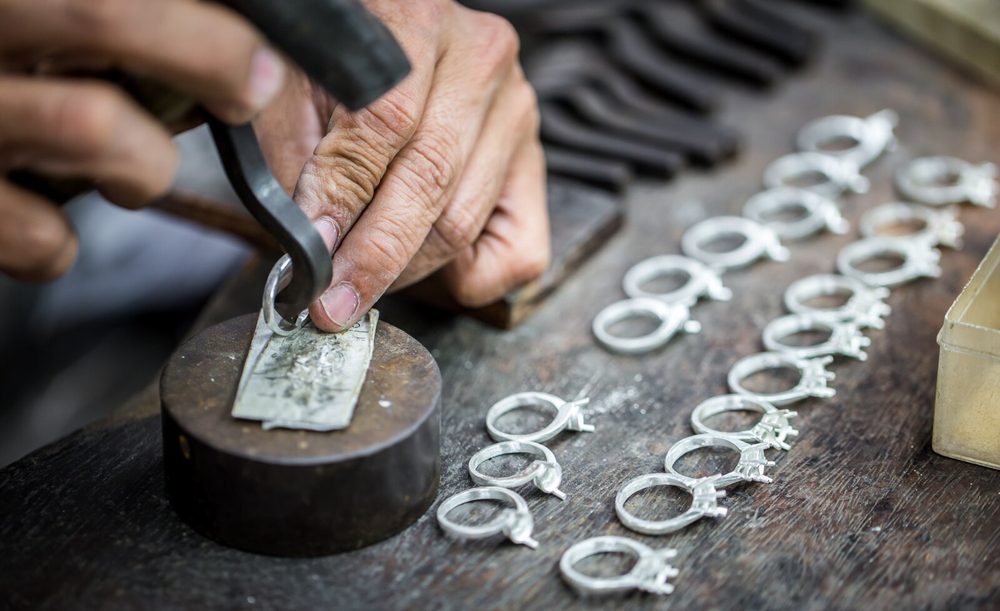 In jewellery and crafts the piece is the sales argument: the product page has to show the material, the measurements and the finish as clearly as the counter does.
A custom theme and a migrated, optimised catalog
The catalog was migrated clean: complete product pages, categories that make sense and a structure that allows browsing by type of piece, material or collection. It is the least glamorous part of the project and the one that shows most later, because filters and search depend on it to lead somewhere.
A product page designed for jewellery
The product page was redesigned around the questions a jewellery buyer asks: material, measurements, finish and photos that show the piece up close and worn. The goal was for the page to answer before the visitor has to write and ask, which is when the sale is still in time.
Simplified checkout, payments and shipping
The buying process was reduced to the essential steps and the payment gateways and shipping options that fitted this kind of product were integrated. In a high-value cart, removing friction is the most direct way to raise conversion without touching the price.
Opening the store to more customers
Crafts and silver travel well: often the buyer is in another country and another language. If the store only speaks the seller's language and only shows one currency, it is asking the visitor for extra effort right before paying, which is the worst moment to ask for it.
 Migrating the catalog is half the work: the other half is each product page resolving the doubt that holds the purchase back.
Multilingual and multicurrency
The store ended up with a language and a currency selector, so the visitor sees the texts and the prices in their own context. It is a change that shows little in the design and a lot in the figures: buying in a foreign currency forces you to do sums, and doing sums before paying is exactly what you do not want.
Performance and SEO: making the product page findable
The performance work focused on the catalog images, which are the main weight of a product store, and on the structure of product pages and categories so they can be indexed properly. A fast product page converts better and also ranks better: both come out of the same work.
Results
The store went live with the custom theme, the migrated and optimised catalog, the redesigned product page, the simplified checkout, payments and shipping integrated, multilingual and multicurrency support and the performance and SEO work. These were the needs and how they were solved:
| Need | How it was solved |
| An inherited catalog, incomplete and unstructured | Catalog migration and optimisation |
| A store that did not represent the brand | Custom PrestaShop theme |
| Product pages that left doubts about each piece | Redesigned product page |
| Carts lost at the last step | Simplified checkout |
| Payments and shipping holding the purchase back | Payment gateways and shipping options |
| Buyers from other countries and languages | Multilingual and multicurrency |
| Slow product pages that were hard to find | Performance and SEO |
The measured results: 95% more conversion and an average order value 3.2 times higher. The second figure explains the first: when the product page resolves the doubt and checkout does not get in the way, the buyer does not only buy more often, they also buy pieces of higher value.
What decides whether a catalog store sells
If you have a catalog that works at the counter but not on screen, these are the points worth reviewing before thinking about more traffic:
- A product page that answers before the question: material, measurements, finish and photos of the piece.
- A structured catalog, with categories, filters and search that lead to the right piece.
- A short checkout, because every extra step is a chance to abandon.
- Payments and shipping that fit the buyer and the place they are buying from.
- The visitor's language and currency, not the seller's.
- Speed, because a slow product page is one many never get to see.
If your catalog sells at the counter but not online, our PrestaShop development page explains how we work, and you can write to us to go through your store piece by piece.
Frequently asked questions
What is gained by simplifying the checkout?
Fewer steps, fewer fields and fewer decisions before paying. In jewellery the average order value is high and any friction holds the purchase back: every step removed is one more cart that reaches the end instead of being left along the way.
Why multilingual and multicurrency?
Because silver and crafts sell beyond the country of origin. If the visitor has to translate the texts and prices in their head, many never get to buy: seeing the content in their language and the price in their currency is part of the sale, not a decoration.
How does the product page influence jewellery sales?
More than it seems. In jewellery the piece cannot be touched, so the page has to answer for the material, the measurements, the finish and how it looks worn. When those answers are on the page, doubt stops being a reason not to buy.
What can be measured after migrating a catalog?
Conversion, average order value, cart abandonment, most-viewed product pages and searches with no results. The last two are the most useful for improving further, because they point to exactly what is missing from the catalog or what cannot be found.