 Victor Arias
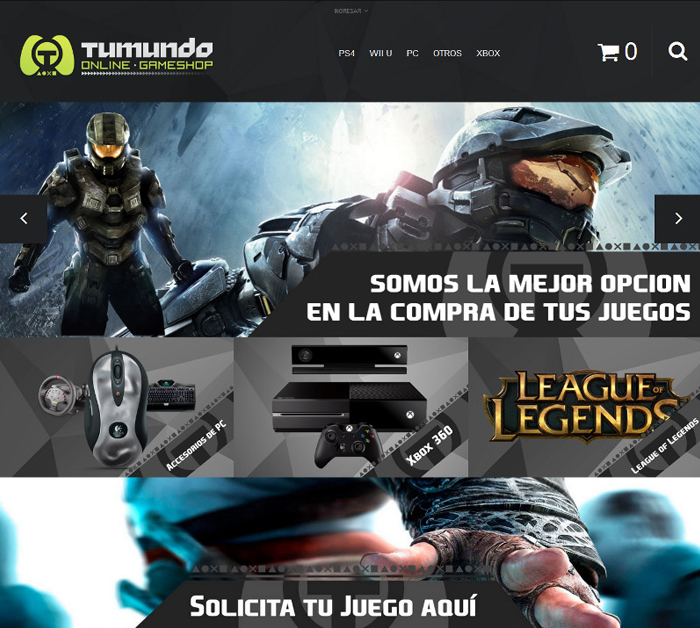
TuMundoOnline Gameshop was built from scratch as a PrestaShop store on PHP and MySQL: a catalog organised by platform, a deals and bundles system, and instant digital delivery — download or key depending on the product —. The result was 120% more sales and 40% higher average order value in a four to six week project.
| Client | TuMundoOnline Gameshop |
| Industry | Online sale of video games and digital entertainment |
| Service | PrestaShop Development |
| Stack | PrestaShop, PHP, MySQL, Apache, Custom theme, Catalog by platform, Deals and bundles system, Digital delivery (download and key) |
| Duration | 4-6 weeks |
| Our role | Design and development of the whole store — custom theme, catalog by platform, deals system and digital delivery — plus launch. |
| Published | May 10, 2013 |
TuMundoOnline Gameshop sells video games and virtual cards: digital products where the buyer decides quickly and expects to get the purchase instantly. This case shows how the store was built from scratch on PrestaShop —PHP and MySQL— with the catalog organised by platform, a deals system and digital delivery that combines an instant download with the sending of keys.
The project was delivered in four to six weeks and closed with sales 120% higher and a 40% higher average order value. These are the decisions that made the difference.
The challenge: a digital products store, not a shelf of boxes
Selling video games online is nothing like selling clothes or furniture. The buyer is not browsing: they know what they want, they compare prices and they expect to play today. Every extra step between "I want it" and "I have it" is a lost sale.
A catalog organised by platform
Someone buying a game is not thinking "action" or "adventure": they are thinking "for my console" or "for PC". If the store forces them through generic categories, the visitor gets lost among hundreds of items and ends up searching elsewhere for what the store already had.
Digital products with two delivery methods
Not everything is delivered the same way: some games are downloaded and virtual cards arrive as a key or redemption code. Without a clear flow the buyer pays and waits, which is the worst possible experience in a digital products store.
Price and deals as the reason to buy
In this sector prices move constantly and deals are the main reason to buy. A store that cannot highlight its discounts, bundles and reduced prices loses exactly the argument that brings the customer in.
The solution: a custom PrestaShop store
The whole store was built on PrestaShop, with a custom theme and the catalog organised around the buyer's real decisions: platform, genre and price. PrestaShop also made it possible to manage hundreds of items, their deals and their delivery methods from a panel the team itself could handle, without depending on anyone else to publish a product or change a price.
 The goal of the whole catalog: getting the buyer to their game and playing it as fast as possible.
Navigation by platform, genre and franchise
The main menu is not a list of academic categories, but a reflection of how people actually look for a game: platform first, then genre, then the specific franchise. Each product page states whether the item is a download or a key, which platform it works on and what it includes, so the doubt is solved on the page instead of ending up in a support email.
Deals, bundles and highlighted prices
Discounts are treated as first-class content: previous price and reduced price in plain sight, deals and bundles sections that raise the cart value. A flexible pricing and promotions system made it possible to apply a discount to one product or to a group of products and withdraw it when the campaign ended, without touching the design.
Digital delivery in two formats
Once payment is confirmed, the store delivers the product by itself: a download link for digital games and a key or redemption code for virtual cards. The buyer does not wait for a member of staff to handle it, and every delivery is registered in their account and in the store panel.
How we implemented it in four to six weeks
The project started from scratch, so the first weeks went into deciding before building: what is sold, how it is found, how it is paid for and how it is delivered. The store was built on those decisions and the full journey — from catalog to delivery — was tested before opening it to the public.
 Every delivery method was tested with a real purchase: payment, confirmation and delivery of the download or the key.
From catalog to management panel
The items were loaded with their attributes — platform, edition, delivery format — and the panel was left ready for the team to add new releases, change prices and build campaigns on their own. That autonomy is what keeps a video game store alive: the catalog changes every week.
Purchase testing before opening
Before launch the purchase was tested end to end with every delivery method: payment, confirmation, download and key delivery. It is the least glamorous part of the project and the one that prevents the worst possible scenario: a customer paying and never receiving their product.
Results
The store launched with the full catalog and a tested purchase flow. These were the needs that were solved and the measured result of the project:
| Need | How it was solved |
| Finding a game by platform | Menu, filters and search by platform, genre and franchise |
| Receiving the purchase instantly | Automatic download or key depending on the product |
| Highlighting deals and bundles | Promotions system with previous and reduced prices |
| Keeping the catalog up to date | Self-managed from the store panel |
The commercial result was 120% more sales and a 40% higher average order value: selling digital products without friction translates directly into carts that close, and deals and bundles did the rest by raising the value of every purchase.
What a digital products store needs
If you sell games, licences, cards or any product delivered online, these are the points that decide whether the store converts or stalls halfway:
- A catalog designed around how people search, not how you file things: platform or use case before internal taxonomy.
- Automatic delivery of the download or the key as soon as payment is confirmed, with a record of what was delivered.
- Prices and promotions you can change without touching the design or depending on a developer.
- A panel the team masters, because in this sector the catalog changes every week.
- Product pages that answer doubts: delivery format, compatibility and contents, before reaching the cart.
If your store sells digital products and you want delivery to be as fast as the decision to buy, our PrestaShop development page explains how we work, and you can also write to us and we will review it with you.
Frequently asked questions
Why PrestaShop for a video game and virtual card store?
Because it handles large catalogs with many variants — platform, edition, region — and lets you change prices and deals without touching the design. It is also code you own: the store can be adapted to the purchase flow the sector needs instead of forcing the business into a closed template.
How is a digital product delivered after payment?
It depends on the product: digital games are delivered with a download link and virtual cards arrive as a key or redemption code. What matters is that delivery happens automatically once payment is confirmed, with no one sending it by hand.
How do you organise a video game catalog so everything can be found?
Around the buyer's real decision: platform first, then genre and franchise, with price and deals always in sight. Filters and the internal search need to reach the game page in a couple of clicks, because a catalog with hundreds of items is useless if it cannot be browsed.
How long does a project like this take?
A digital products store like this one was delivered in four to six weeks: catalog and navigation definition, custom theme, deals system and digital delivery, full purchase testing and launch.